
"Central American coffee regions"
1000 article(s) found

A brief introduction to the Origin, Development, History and Culture of Fine Coffee beans in the Manor
Nepalese coffee cultivation and production has a unique environment, the spread of fertile volcanic ash soil, coupled with shade planting methods, to establish a good production quality, Nepalese coffee has a rich mellow and fragrant taste, moderate acidity and a good sense of balance of bitter taste, which is regarded as top grade in the eyes of international coffee experts. Because of the national character of the Latin American people, foreign buyers

El Salvador Parkmara Coffee Kuskabapa region
When tasting Salvadoran coffee, you can first put the right amount of sugar into the coffee, add ice and stir it well. You can also add fresh milk (fresh cream is also fine) according to your preference, so you can slowly enjoy this cool and mellow Salvadoran coffee. Let this American specialty coffee bring you a new round of taste enjoyment if

Smooth Peruvian Coffee Flavor the characteristics of the manor producing area introduce Peruvian boutique coffee
Peru is located in western South America, with a coastline of 2254 kilometers. The Andes runs from north to south, and the mountains account for 1% of the country's area. it belongs to the tropical desert region with a dry and mild climate. Peruvian coffee is mostly grown at the foot of the Andes, where it is rich in traditional Central American top coffee beans. Peruvian coffee beans grown in the central part of the country and Cusco in the south
Introduction to the flavor of Guatemala Antigua coffee beans at auction on July 27 at Starbucks
Guatemala, real Central American coffee beans. Beans grown in Guatemala tend to have rich flavors of chocolate, cocoa and toffee, especially Strictly Hard Bean raw coffee grown in the Atitlan and Antigua coffee-growing areas of the central highlands of the country, showing these qualities and floral acidity, which is usually smoky or chocolate-floral. July 27th

The geographical environment of the cultivation of Guatemalan boutique coffee Antigua Arabica coffee
Today, we will study a perfect coffee that combines quality and affordability: Antigua, Guatemala. Guatemala is the second largest coffee producer in Central America and in many ways Antigua coffee beans represent all the best quality that coffee beans in the region have to offer. For those who want to switch from drinking mass-produced coffee to high-end coffee beans, Guatemala Antioch

How to taste Nicaraguan coffee
Following Kaibei (Wechat official account vdailycom) found that the Beautiful Cafe opened a small shop of its own Nicaragua is located in central Central America, it is bordered by the Pacific Ocean to the west and the Caribbean Sea to the east. The highlands in the north and the coastal plains in the east are part of the Central American volcanic belt. The eastern plain is high-temperature and rainy, with a tropical maritime climate. The suitable climate provides excellent for the cultivation of coffee.

Costa Rica Las Haas Manor Coffee Bean flavor describes how to drink Las Haas Manor Coffee
The exchange of professional baristas please follow the coffee workshop (Wechat official account cafe_style) Costa Rica Las Haas Manor coffee bean flavor describes how Las Haas manor coffee is drunk to Costa Rica Costa Rican population: 4586000 in the past, Costa Rica has successfully sold its coffee according to the name of the region where it is produced. However, tastes vary greatly from region to region

Panamanian Cupid Coffee Flavor description Taste characteristics Fine Coffee Bean producing area Manor
Panama is a small country located in the center of the American continent. The waters of the Atlantic and Pacific oceans flood its beaches. Panama is located at 9 degrees north latitude, the meeting point of the Central Mountains, where Mount Baru, one of the highest volcanoes in Central America, is located. Baru volcano has an altitude of more than 11400 feet, and the land around it is rich in nutritious and fertile soil, which is unique to Panama.

El Salvador Himalayan Coffee Flavor Description Region Features Roast Degree Boutique Coffee Introduction
El Salvador is tied with Mexico and Guatemala as the producer of Asa and Meldo, and is competing with other countries for the top one or two places in Central America. Highland origin, for the size of large coffee beans, fragrant taste mild. As in Guatemala and Costa Rica, coffee in El Salvador is graded according to altitude, with the higher the altitude, the better the coffee.

Description of the Flavor of Coffee beans in Joy Manor, Nicaragua introduction to the production area of Grinding scale varieties
Nicaraguan Joy Manor Coffee Bean Flavor description Grinding scale Variety production region introduction because of the national character of the Latin American people, it is difficult for foreign buyers to do business directly with the Latin people, and the Latin people do not attach importance to credit and do things too casually. The quality of the goods is uncertain, and the exported products are also mixed with sundries, but Latin America does indeed envy the whole world.

Regional treatment of El Salvador Mercedes coffee beans how to drink flavor varieties
How do Salvadoran Mercedes coffee beans drink flavor regional treatment Salvadoran coffee ranks alongside Mexico and Guatemala as producers of Asa and Merdo, and is fighting for the top two places in China and the United States with other countries. The highlands of origin are large coffee beans of all sizes, which are fragrant and mild in taste. Like Guatemala and Costa Rica, El Salvador
World Coffee Information Latin American caffeine climate warming is facing decline
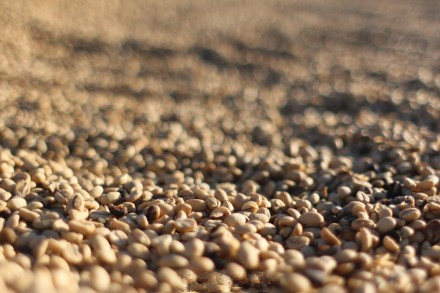
Organic coffee in Latin America is under threat due to the spread of rust leaf disease at higher altitudes due to global warming, Taiwan's United News Network reported recently. For nearly six years, a fungus commonly known as "coffee rust" has killed a large number of coffee trees in Central America, so many that scientists believe that coffee harvests in the region could be reduced by as much as 40%. The culprit is what scientists say

Panamanian Coffee Pocket Flower Butterfly soft small fresh single Coffee
Abstract: Panama belongs to Central American countries, bordering Costa Rica in the west and Colombia in the east. Anyone who knows anything about individual coffee should know that Panamanian coffee is famous in the coffee world as the geisha Geisha (the name of Rosa) in the Emerald Manor. It can be said that it is a country that strives for excellence in coffee and abounds in high-quality coffee. Panama is a Central American country with a western neighbor.

Flavor Flavor Aroma Description Introduction
Nicaragua is now one of the poorest countries in Central America. Because of its poor economic base, the coffee industry is still in a relatively backward state, while coffee farmers are in an extremely poor state. Fortunately, Nicaragua's coffee has received some foreign aid funds to improve the quality of its coffee. Nicaragua's Madagerba, Chinodega, Segovia region of coffee

Introduction to the Grinding degree of Panamanian Coffee beans by Flavor description method
Growing environment Panama is a small country located in the center of the American continent. The waters of the Atlantic and Pacific oceans flood its beaches. Panama is located at 9 degrees north latitude, the meeting point of the Central Mountains, where Mount Baru, one of the highest volcanoes in Central America, is located. The Baru volcano has an altitude of more than 11400 feet, and the land around it is rich in nutritious and fertile soil.

Coffee in Central America introduces the name and cultivation of coffee producing areas in seven countries.
For professional baristas, please follow the Coffee Workshop (official Wechat account cafe_style) 200Coffee School the land bridge between Central America and North and South America, there are seven countries: Belize, Costa Rica, El Salvador, Guatemala, Honduras, Nicaragua and Panama. Coffee is produced in seven Central American countries, including Guatemala, Costa Rica and Honduras.

What is the difference between coffee regional flavors?| What factors change coffee flavor?
Professional coffee knowledge exchange More coffee bean information Please pay attention to coffee workshop (Weixin Official Accounts cafe_style) Coffee production places are mostly distributed between the tropic of tropics north and south of the equator, i.e. 25 degrees north of the tropical or subtropical equator and 30 degrees south of the equator. Areas with an annual average temperature of 16-25 degrees Celsius, frost-free and rainfall of 1600-2000 mm. The main production of coffee today

Genesis Manor, Costa Rica, Solar microbatch | exquisite small amount of Central American coffee
For more professional coffee exchanges, please scan the code to follow Wechat: FrontStreetCoffee [Costa Rica Genesis Micro batch] country: Costa Rica region: West Valley processing Plant: Finca Genesis Genesis Micro batch processing Plant altitude: 1700 m Variety: Kaddura / Kaduai Grade: SHB treatment: solarization 01 | introduction to the processing plant Piedades
Panamanian coffee, the king of coffee price ratio in Central America.
Panamanian Coffee growing Environment Panama is a small country located in the center of the American continent. The waters of the Atlantic and Pacific oceans flood its beaches. Panama is located at 9 degrees north latitude, the meeting point of the Central Mountains, where Mount Baru, one of the highest volcanoes in Central America, is located. The Baru volcano has an altitude of more than 11400 feet and the land around it is rich.

Description of Flavor of Latin American Coffee Bean by Grinding scale treatment
Description of the flavor of Latin American coffee beans by grinding scale method Mexican coffee varieties are coffee producing areas from Cottpe and Veracruz in the north to Plamas in the central Oaxaca region to Chiapas in the southernmost areas. and the flavor of each region is also different. Although there are many producing areas in Mexico, but because the quality stability is not high, so we have to try in many ways.